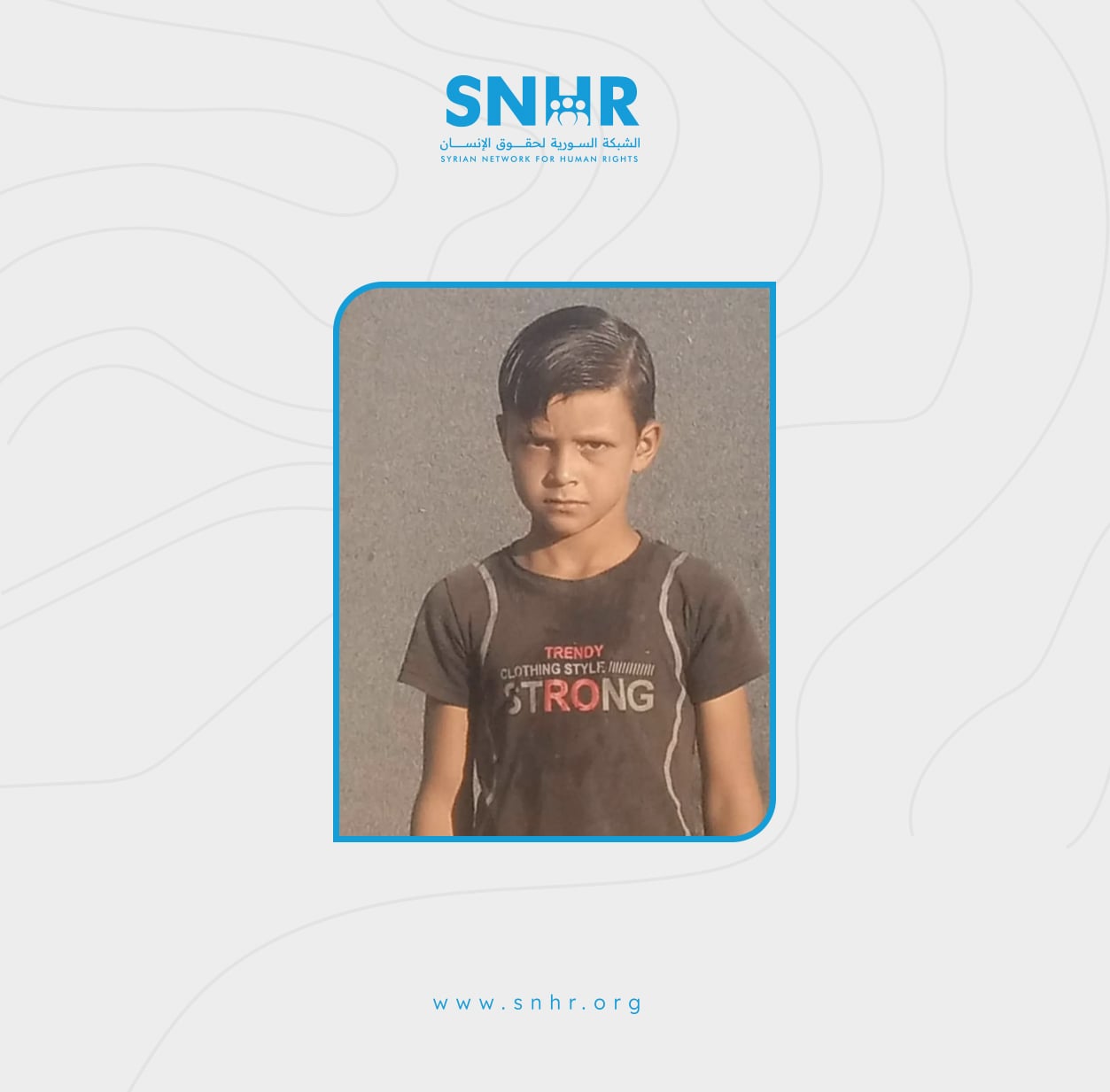

On Saturday, June 27, 2026, Abdullah Taher al-Mutlaq, a child, was killed, and Fadi Matroud al-Mutlaq and Faisal Saleh al-Mutlaq, both children from the al-Amour al-Jarrah clan, sustained varying injuries when a landmine, a remnant of the conflict, exploded in the Rawd al-Wahsh area, northwest of the city of al-Sukhnah in the eastern Homs countryside. The area is under the control of the Syrian government.
This area is among the locations that have seen shifts in control between the parties to the conflict, making it extremely difficult to determine which side planted the mine.
We are continuing our investigations, including reviewing and gathering further evidence and information. Therefore, we urge anyone with information or details related to this incident to provide them to us via our official email address:
Legal Conclusions:
- The landmine explosion that killed Abdullah Al-Mutlaq and injured two other children is an example of how the effects of the conflict continue to threaten the lives of civilians.The continued presence of landmines in populated areas or near sites of civilian activity—without their removal or the issuance of warnings to the population—constitutes a violation of positive protection obligations under international humanitarian law, particularly Article 10 of the Amended Protocol II to the Convention on Certain Conventional Weapons (CCW) regarding mines, booby-traps, and other devices.
- The failure of controlling parties to provide minefield maps or install clear warning signs exposes civilians to death or injury and constitutes a breach of the duty to warn and inform, as stipulated in international humanitarian law.
- The inability to identify the party that planted a mine raises the issue of impunity, necessitating an independent investigation and underscoring the need for comprehensive documentation of explosive remnants of war and contaminated areas to prevent recurring incidents.
- The continued presence of mines in civilian areas poses a threat to the right to life and physical integrity.
Recommendations of the Syrian Network for Human Rights:
- Organize and coordinate efforts to remove explosive remnants of war (ERW) scattered throughout the country, through a comprehensive national plan in partnership with relevant international organizations.
- Guarantee the rights of victims to access compensation, treatment, and psychological care, especially children and those with permanent disabilities resulting from these remnants.
- Identify contaminated areas and publicly publish maps of them, and activate community awareness campaigns to raise awareness about the dangers of explosive devices.
- Cooperate with relevant international bodies such as UNMAS and the ICRC in developing technical and legislative standards for addressing ERW.
- Support Syrian post-conflict efforts through funding, training, and equipment, ensuring the effective and comprehensive removal of all ERW.
- Provide legal and technical support to document the use of prohibited weapons by the parties involved, contributing to accountability and justice.
- Provide sustainable and direct funding for mine and ERW removal programs, and for building sustainable national technical capacities in this field.
- Supporting rehabilitation and long-term care programs for victims of these remnants, especially in marginalized and most affected areas.