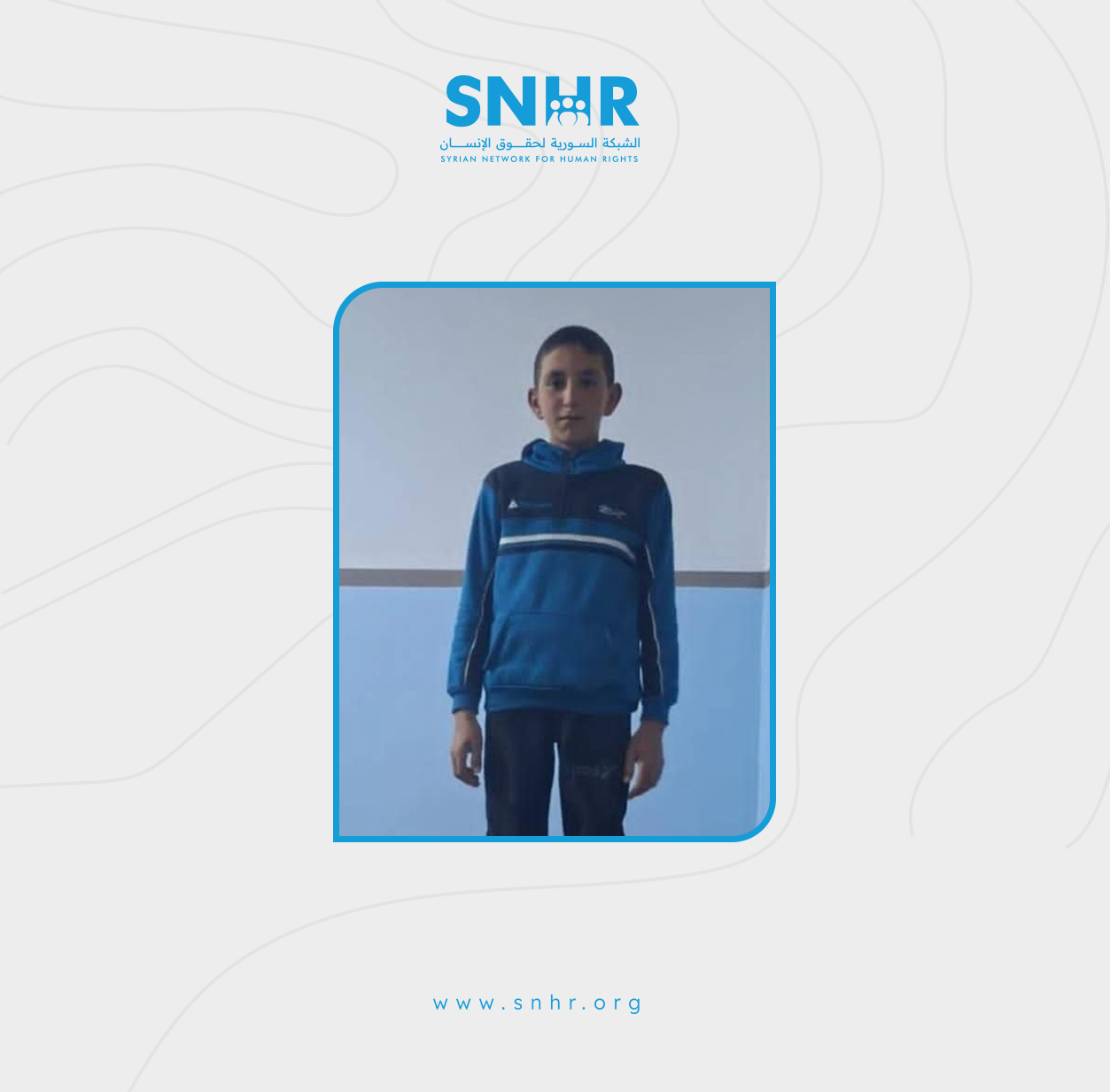

On Wednesday, March 4, 2026, 11-year-old Hussein Asaad al-Khalafi, from al-Rahya village in the eastern Hama countryside, was killed by a landmine explosion while herding livestock near the village. The area is under the control of the Syrian government.
Determining who planted the mine is extremely complex. According to information obtained by the Syrian Network for Human Rights from field sources, the area was under the control of Bashar al-Assad regime forces during a period when landmines were likely planted.
We are continuing our investigations, including reviewing and gathering further evidence and information. Therefore, we urge anyone with information or details related to this incident to provide them to us via our official email address:[email protected]
Legal Conclusions:
- The landmine explosion that killed the child Hussein al-Khalafi exemplifies the continued impact of conflict on civilian lives.
- The continued presence of landmines in populated areas or near civilian activity, without their removal or warning to the population, constitutes a violation of positive protection obligations under international humanitarian law, particularly Article 10 of the Protocol to the Convention on Conventional Weapons (CCW) on mines, booby traps, and improvised explosive devices.
- The failure of controlling parties to provide minefield maps or place clear warning signs exposes civilians to death or injury and violates the duty to warn and inform under international humanitarian law.
- The inability to identify the party that planted the mine raises the issue of impunity, necessitating an independent investigation and underscoring the need for comprehensive documentation of explosive remnants of war and contaminated sites to prevent recurring incidents.
- The continued presence of landmines in civilian areas constitutes a threat to the right to life and physical safety.
The Syrian Network for Human Rights Recommendations:
- Launch an urgent investigation into the incident to determine which party to the conflict planted the mines in the area and hold the responsible party legally accountable for negligence or deliberate action.
- Expedite mine clearance operations, especially in agricultural and pastoral areas near populated areas, in cooperation with international organizations such as the United Nations Mine Action Service (UNMAS), the Syrian Arab Red Crescent, and the Syrian Civil Defense.
- Prepare and disseminate comprehensive and up-to-date maps of mines and explosive remnants of war (ERW) at the local level, using clear warning signs in all suspected areas, particularly those under the de facto control of armed forces.
- Implement comprehensive local awareness campaigns targeting residents of rural areas and camps, educating them about the dangers of mines and how to identify and avoid them, in cooperation with civil society organizations.
- Provide direct support to the victims’ families through immediate financial compensation, psychological and social support, and inclusion in programs assisting victims of ERW.