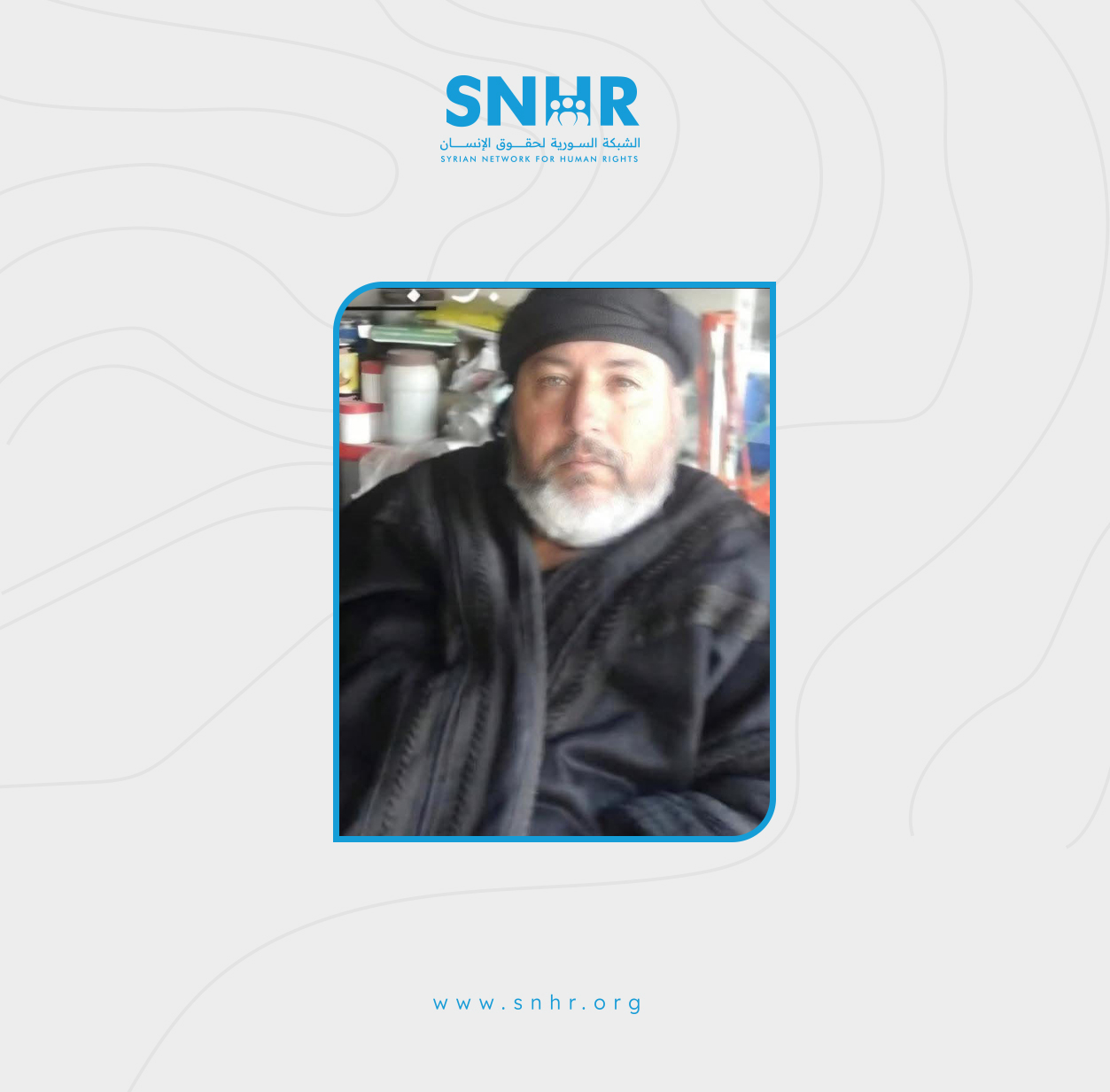

On Friday, August 22, 2025, Najib Saadou, a resident of the village of Sheikh Ali Kasoun in the eastern Hama countryside, was killed and his wife, Shaza Habib, was injured when unknown gunmen opened fire on the outskirts of the village. The identity of the perpetrators remains unknown at the time of publication. The area is under the control of the transitional government.
According to what the Syrian Network for Human Rights (SNHR) documented through reliable local sources, unidentified gunmen riding a motorcycle opened fire directly at Najib and his wife as they were heading to visit a relative in the village, severely wounding them. They were subsequently transferred to Hama National Hospital, where Najib died before arriving.
We are continuing our investigations, including reviewing and gathering more evidence and information. Therefore, we hope that anyone with information or details related to this incident will provide them to us via our official email address: [email protected]
Legal Conclusions:
- The killing of Najib Saadou and the injury of his wife constitute a flagrant violation of the right to life, as stipulated in Article 6 of the International Covenant on Civil and Political Rights. The state has a legal obligation to conduct a prompt and effective investigation, ensure accountability for those responsible, and prevent impunity.
- The indiscriminate firing by an armed group outside official control in a vital civilian area constitutes a failure to fulfill the state’s obligation to protect civilians, which contravenes the principle of the “duty to protect” binding on de facto authorities under international law.
- The fact that the gunman is unknown does not diminish the transitional government’s responsibility to maintain security. The inability to contain civil conflicts or the behavior of local armed groups impacts the enforcement of the rule of law. If the perpetrator is not identified and prosecuted, this reinforces the pattern of impunity, undermines civilian confidence in justice, and creates a dangerous environment for the recurrence of these crimes.
- The fact that the gunman is unknown does not diminish the transitional government’s responsibility to maintain security. The inability to contain civil conflicts or the behavior of local armed groups impacts the enforcement of the rule of law
- If the perpetrator is not identified and prosecuted, this reinforces the pattern of impunity, undermines civilian confidence in justice, and creates a dangerous environment for the recurrence of these crimes.
- The continued presence of weapons in the hands of unofficial actors increases the likelihood of security chaos and serious violations. This poses a direct challenge to the transitional government in its efforts to impose the rule of law and achieve security.
The Syrian Network for Human Rights’ recommendations:
- Initiate an urgent, impartial, and transparent investigation under the supervision of independent judicial authorities to uncover the circumstances of the crime and identify the perpetrator, while ensuring the protection of witnesses and the documentation of evidence.
- The transitional government must protect vital areas, including by deploying security checkpoints, activating surveillance systems, and tightening control over unofficial armed groups.
- Criminal prosecution of all those involved, including any parties or local groups involved in the shooting, must be carried out, and they must be brought to fair and public trials that guarantee the rights of victims and their families.
- Providing financial and moral compensation to the families of the victims, and ensuring that injured civilians receive medical care and psychological support, as part of reparations in accordance with international standards.
- Launching a local awareness campaign on respect for the rule of law and the rejection of indiscriminate weapons, with the participation of local community leaders, to combat irregular armament and tribal violence.