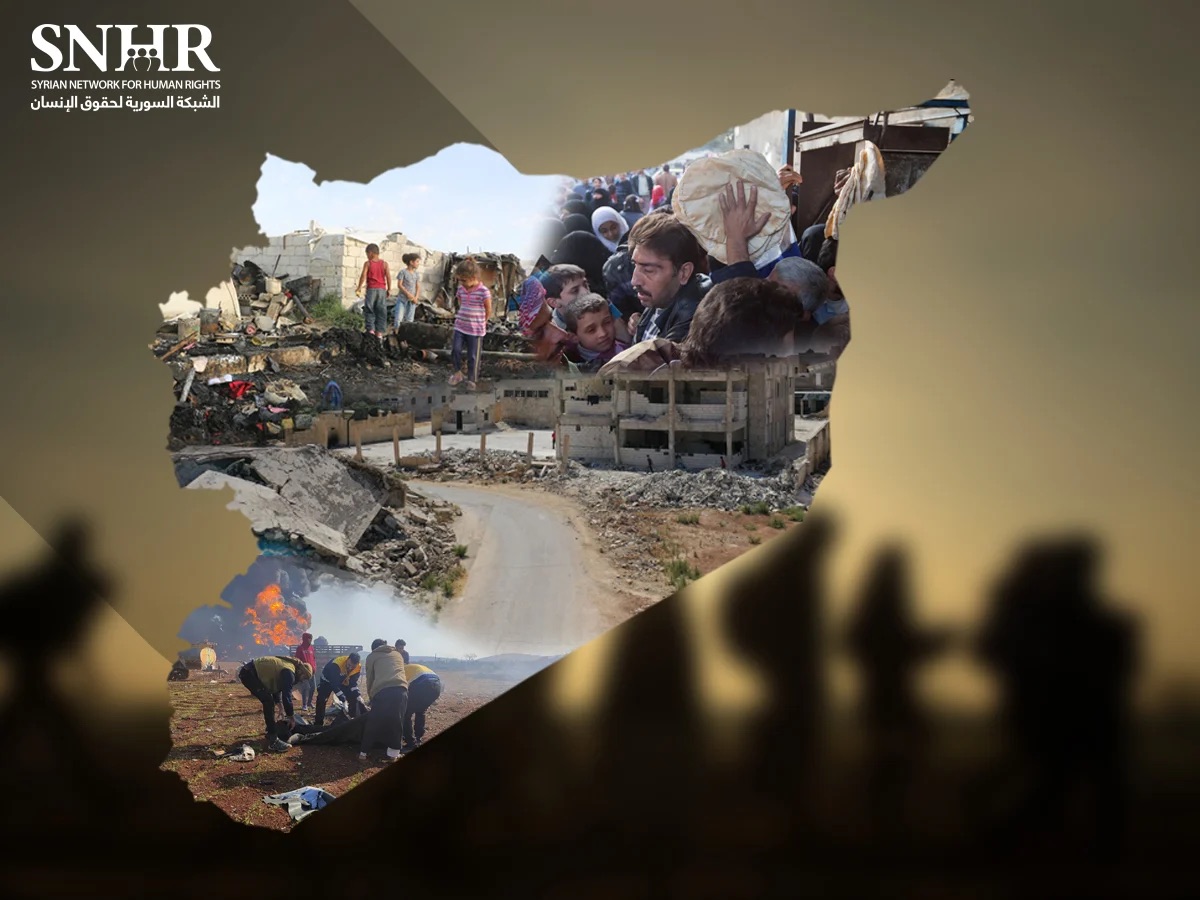

On Wednesday, July 9, 2025, two children, Khaled Ammar al-Youssef (al-Hardan) and Ahmad Saeed al-Youssef (Al-Hardan), both from the village of Tal Mardikh in the eastern countryside of Idlib province, were killed when an unexploded ordnance, the type of which we were unable to identify, exploded in one of the houses in the village. It should be noted that the area is under the control of the transitional government.
Legal conclusions:
• Remnants of weapons continue to pose a serious threat to the lives of civilians, especially children, who may handle these objects without being aware of their dangers. The network has previously issued several reports on cluster munitions and weapon remnants, warning of their long-term effects, which are not limited to killing, but also include permanent injuries and physical and psychological deformities.
• The use of these types of weapons in populated areas by various parties to the conflict over the past years constitutes a serious violation of international humanitarian law, particularly the principles of distinction and proportionality, and entails legal responsibility.
• The persistent effects of these weapons after the conflict are an extension of previous violations, for which the parties that used them or left them uncleaned bear primary responsibility, whether through causation or negligence.
• Article 6 of the International Covenant on Civil and Political Rights guarantees the right to life, which includes protecting the population from residual threats that endanger their lives even in times of peace.
Recommendations of the Syrian Network for Human Rights:
• Organize and coordinate efforts to remove war remnants scattered throughout the country through a comprehensive national plan in partnership with relevant international organizations.
• Ensure the rights of victims to access compensation, treatment, and psychological care, especially children and those with permanent disabilities as a result of these remnants.
Identify contaminated areas and publish maps of them, and launch community awareness campaigns to raise awareness about the dangers of explosive objects.
Cooperate with relevant international bodies such as UNMAS and ICRC in developing technical and legislative standards for dealing with war remnants.
• Support Syrian efforts in the post-conflict phase through funding, training, and equipment to ensure the effective and comprehensive removal of all remnants of war.
• Provide legal and technical support to document the use of prohibited weapons by the parties involved, contributing to accountability and justice.
• Provide sustainable and direct funding for mine and explosive remnants clearance programs and for building permanent national technical capacities in this field.
• Support long-term rehabilitation and care programs for victims of these remnants, especially in marginalized and most affected areas.