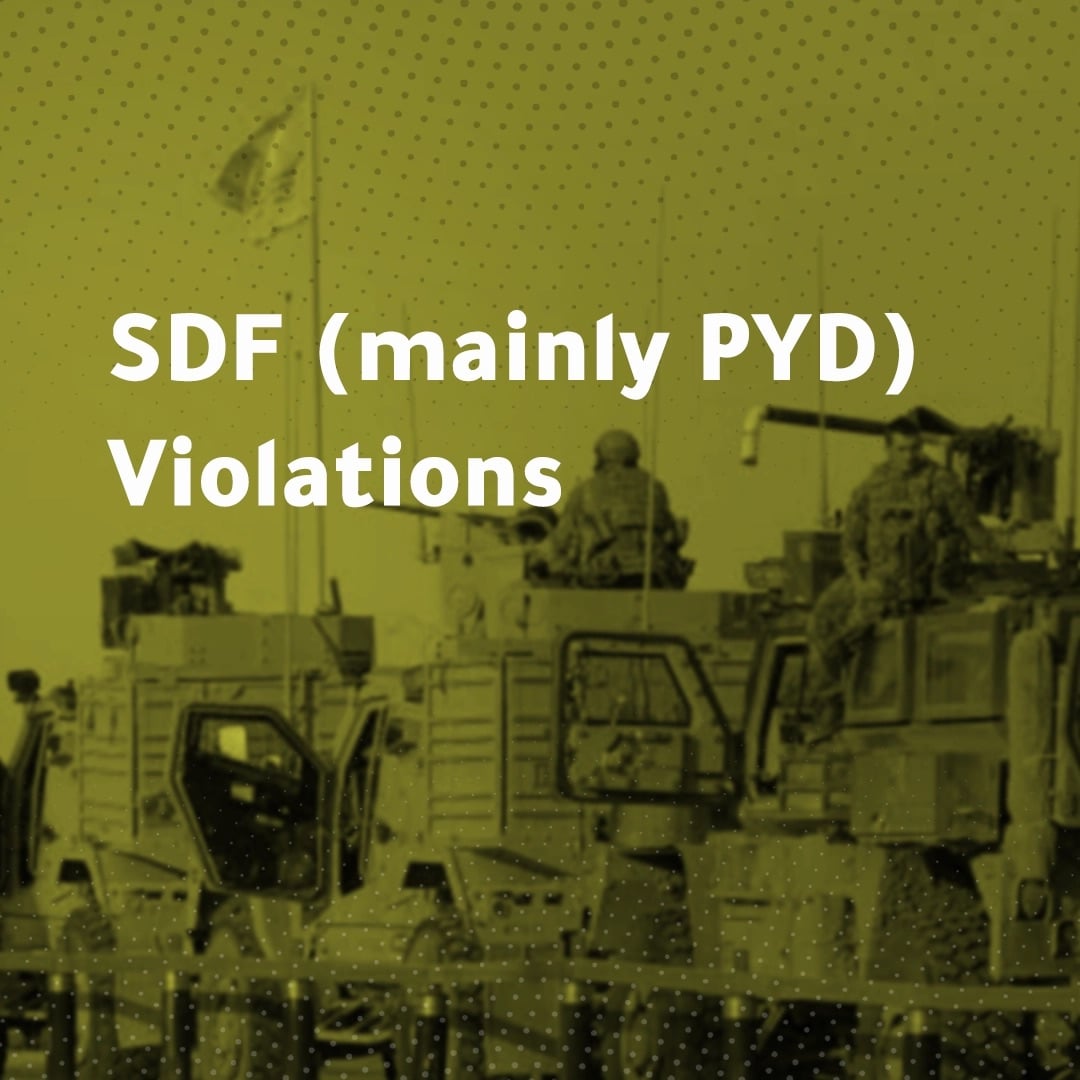

On Friday, May 16, 2025, Ramadan Jerj al-Hasu, a civilian from the town of al-Hawayej in the eastern suburbs of Deir Ez-Zour Governorate, was arbitrarily arrested by members of the Syrian Democratic Forces (SDF) in the town, which is under their control.
According to information we obtained from reliable local sources, the SDF raided Ramadan’s home in the town in the early morning hours and, after arresting him, took him to an unknown location. The sources also confirmed that the arrest/detention was carried out without an official warrant and was carried out in a humiliating manner.
Legal Conclusions
- This arrest, without a formal warrant, clear charges, or bringing the detainee before a competent judicial authority, constitutes a violation of Article 9 of the International Covenant on Civil and Political Rights, which prohibits arbitrary detention and requires that the detainee be informed of the reasons for his arrest and be able to challenge it before a court.
- Taking detainees to an unknown location and preventing them from communicating with their families or lawyers constitutes enforced disappearance, which is prohibited under the International Convention for the Protection of All Persons from Enforced Disappearance, which affirms the right to know the whereabouts of detainees and to protect them from ill-treatment.
- Confiscating detainees’ phones without a warrant is a violation of the right to private property and constitutes an arbitrary practice that contravenes fundamental safeguards governing criminal procedure.
- Carrying out the arrest in a degrading manner falls within the framework of torture, which is prohibited at all times.
Recommendations by SNHR
- The immediate and unconditional release of those arrested in this incident, or their referral to a civilian court that meets the conditions for a fair trial, if there are genuine legal charges against them.
- Launch a transparent and independent investigation into the conditions of his detention, particularly into allegations of degrading treatment, and hold those responsible for violations accountable.
- Enabling them to communicate with their families and lawyers representing them and ensuring their physical and psychological safety during their detention, in accordance with international standards.